Articles

Occupational licensing undermines some of the value of technological innovation

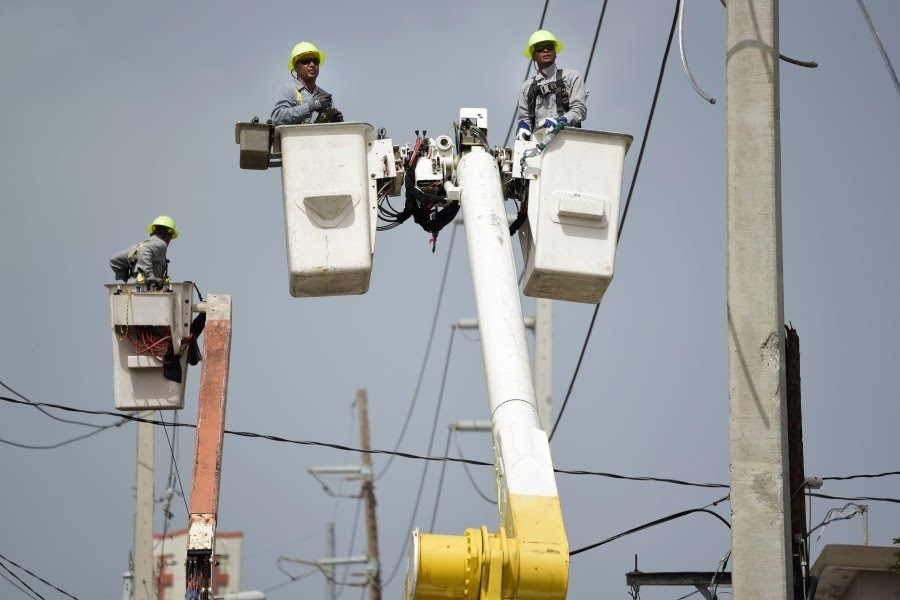
One particularly prevalent and pernicious form of regulation is occupational licensing. Occupational licensing is essentially a government issued permission slip required to enter certain regulated occupations. The share of U.S. workers required to hold an occupational license has exploded from around 5% in 1950 to 25% in 2020. Many occupations within the home services industry––which employs nearly six million American workers––require an occupational license, but states vary widely in which occupations they license.

Occupational licensing undermines some of the value of technological innovation Read More »

Vittorio Nastasi
December 21, 2022
Occupational licensing undermines some of the value of technological innovation

Dependence that hurts economic self-sufficiency

Despite the collapse of the economic model brought about by the end of Section 936 (1996) and the eventual bankruptcy of the territorial government (2016), it is evident that Washington, much less the territory's officials, want to think about structural changes that would make it possible to devise an economic strategy that does not depend on federal aid. As it is, it appears that we will remain hostage for the short term. Local politicians and in some instances, business groups, have preferred to go to the federal capital to ask for new aid disconnected from a coherent economic development program.

Dependence that hurts economic self-sufficiency Read More »

Gustavo Velez
December 19, 2022
Dependence that hurts economic self-sufficiency

The Case for Bringing Back Neckties (and Classical Liberalism)

Liberalism—or, to clarify, classical liberalism, the liberalism of Adam Smith, George Washington, and James Madison, which developed a few centuries ago and cherishes free markets, limited government, and flourishing social institutions—is (like the necktie) a bit out of favor. That’s ironic, because it produced so much good.

The Case for Bringing Back Neckties (and Classical Liberalism) Read More »

Bruce Rottman
December 6, 2022

Meloni: anyone who refuses a reasonable job loses unemployment benefits

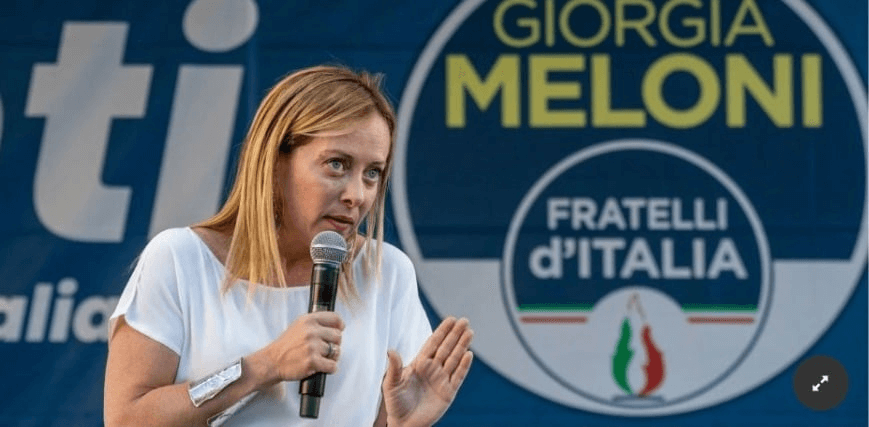
The government's proposal is as simple as it is reasonable, but due to the current political discussion and debates, it is also controversial. According to the initiative, the person who is collecting the subsidy and receives a "reasonable" job offer, in case of refusing the job will automatically lose the government income. "For those who can work, the solution cannot be the Citizenship Income," Meloni said in his last speech in the Italian Parliament.

Meloni: anyone who refuses a reasonable job loses unemployment benefits Read More »

Marcelo Duclos
December 5, 2022
Meloni: anyone who refuses a reasonable job loses unemployment benefits

Friedrich A. Hayek (1899-1992), his legacy and classical liberalism

Fortunately, he lived long enough to see his towering intellect recognized again. Both Keynesians and socialists were eventually defeated soundly by the tide of events and the truth of his teachings. Classical liberalism is once again a vibrant body of thought. Austrian economics has re-emerged as a major school of economic thought, and younger scholars in law, history, economics, politics, and philosophy are pursuing Hayekian themes.

Friedrich A. Hayek (1899-1992), his legacy and classical liberalism Read More »

Peter J. Boettke, PhD
November 8, 2022
Friedrich A. Hayek (1899-1992)

Joseph Stiglitz against the free market

But Stigliz condemns inequalities instead of realizing what a blessing they are; otherwise if all men liked the same woman or if they all wanted to be doctors and there were no tambourines, society would collapse. Even conversation would be unbearably tedious because it would be just like talking to the mirror. On the other hand, inequalities of income and wealth in a free society refer to rewards and punishments for serving or not serving the needs of others.

Joseph Stiglitz against the free market Read More »

Alberto Benegas, PhD
November 7, 2022

Markets Aren't Perfect, but Government Is Worse

No serious free marketer believes that markets are perfect. We aren't utopians. Unfortunately, perfect markets and perfect competition are often the starting point of economic textbooks. This rosy starting point leads many to conclude that when conditions are less than perfect, the best course of action for a correction is government intervention. It's wrong.

Markets Aren't Perfect, but Government Is Worse Read More »

Veronique de Rugy
October 24, 2022

Progressive Paradise Lost

Puerto Ricans have lived through decades of this left-wing utopia, and they are fleeing it. The island’s working-age population declined by 100,000 since 2005, as the economy shifted from stagnation to depression. In a parallel universe with free markets and low regulation, Puerto Rico could have become the Singapore of the Caribbean.

Progressive Paradise Lost Read More »

Salim Furth
October 23, 2022
Progressive Paradise Lost
Scroll to Top