


Ángel Carrión-Tavárez
Director of Research and Policy at Puerto Rico Institute for Economic Liberty
Jaimie Cavanaugh
Senior State Policy Counsel at Pacific Legal Foundation
“CON programs generally fail to contain health care costs and [...] may pose anticompetitive risks. [...] CON programs risk entrenching the position of oligopolists and undermining consumer welfare.”
— U.S. Federal Trade Commission and Department of Justice
1. Introduction
Certificate-of-need (CON) laws are state- or territory-level regulatory regimes that condition the entry or expansion of certain health-care facilities and services on prior approval by a government agency. In jurisdictions that maintain CON programs, providers typically must demonstrate a community “need” for proposed projects—for example, new hospital beds, advanced imaging equipment, or the initiation of particular service lines— acquisition, construction, or expansion can proceed and services can become available to patients. Proponents argue that CON can reduce duplicative capacity, support financially fragile safety-net institutions, and enable more deliberate health system planning; critics argue that CON can act as an anticompetitive barrier to entry, reducing supply, limiting access, and potentially raising prices (Mitchell, 2024a; Stratmann, 2022).
This report examines CON policies in Puerto Rico and the broader United States, with emphasis on the policy tradeoffs implied by empirical research and by Puerto Rico’s distinctive health financing context. Puerto Rico’s health system faces structural constraints that differ from those of U.S. states, including federal program design and funding differences that shape coverage, provider participation, and service availability (Portela & Sommers, 2015; Rivera-González et al., 2022). These constraints may influence how entry regulation interacts with access, quality, and market structure on the Island, particularly for services such as home health and post-acute care where baseline availability and quality may already differ from the states (Dixit & Rivera‐Hernandez, 2022).
The study has two objectives. First, it synthesizes the peer-reviewed and policy literature on the effects of CON laws on outcomes such as prices, utilization, quality, and market dynamics, highlighting areas of consensus and persistent disagreement (Courtemanche & Garuccio, 2025; Stratmann, 2022). Second, it situates these findings in Puerto Rico’s policy environment, identifying questions that are especially salient for territorial decision-makers: (a) what types of CON review (e.g. beds, imaging, ambulatory surgery, long-term care) are most likely to generate net benefits; (b) how to design review criteria and timelines to avoid unnecessary delays; and (c) how to coordinate CON with broader reforms in Medicaid/Medicare financing and provider payment.
2. Survey of Literature
A substantial body of academic literature has critically evaluated CON statutes, including more than 128 studies reporting over 450 empirical tests. Taken together, this evidence supports the conclusion that CON laws have not achieved their stated policy objectives; instead, the literature commonly finds that CON regimes are associated with higher health care spending, reduced access to services, and mixed or adverse quality effects, and that they do not consistently improve access for underserved populations (Mitchell, 2024a, 2024b). A recurrent critique is that CON laws operate primarily as protectionist barriers that shield incumbent providers from competition, often to the detriment of patients and prospective entrants (Mitchell, 2024a, 2024b). In practice, these policies require new or expanding facilities to demonstrate “need” to regulators and frequently provide mechanisms for established entities to challenge or delay proposed projects.
A recurring finding across CON jurisdictions is that the application process can disadvantage new entrants and smaller providers, which may lack the resources to navigate complex administrative procedures or respond effectively to challenges brought by established competitors. This concern is reflected in (a) the contemporary CON scholarship, which spans several methodological traditions, including cross-state panel analyses that exploit variation in CON scope and stringency; (b) quasi-experimental designs examining discrete policy changes; and (c) sector-specific studies focused on hospitals, imaging, and long-term care. Reviews of this empirical literature generally characterize the evidence as mixed-to-negative and context-dependent, with results varying by outcome measure, service category, and the details of implementation (Mitchell, 2024a, 2024b).
2.1. Hospitals, Capacity, and Utilization
A central empirical question is whether CON meaningfully restrains hospital capacity growth and how any capacity effects translate into utilization. Studies of hospital markets commonly examine outcomes such as beds per capita, admissions, and procedure volumes, sometimes differentiating by ownership type or by urban versus rural markets. Existing research investigates hospital-related outcomes associated with CON regulation, contributing to the ongoing debate over whether CON reduces excess capacity or instead constrains needed expansion (Courtemanche & Garuccio, 2025). In parallel, the policy literature includes arguments that CON can protect incumbent hospitals (including those providing uncompensated care) by limiting entry, but that such protection may come at the cost of reduced competitive pressure to innovate or expand service availability (Cavanaugh & Mitchell, n.d.).
2.2. Quality of Care
Another key strand assesses whether CON affects quality. Importantly, while these studies evaluate the outcomes associated with CON regulation, the CON process itself is primarily a supply-control mechanism, not a tool designed to ensure clinical quality, which is typically governed by separate accreditation, licensure, inspection, and enforcement standards. One hypothesized mechanism is volume—if CON reduces fragmentation and concentrates complex procedures in fewer facilities, outcomes could improve; conversely, if CON limits entry and dampens competition, quality could worsen. Some studies analyze the relationship between CON laws and measures of hospital medical service quality, providing evidence that has been cited in arguments for repeal or narrowing of CON (Stratmann, 2022). The broader literature remains divided on whether any quality effects are robust across clinical domains and whether quality measures capture patient-centered outcomes versus process or structural proxies.
2.3. Market Structure, Competition, and Prices
A substantial policy-oriented literature argues that CON can function as a barrier to entry, with implications for market concentration and prices. Studies and reviews often link these concerns to observed heterogeneity in state CON programs, including differences in covered services, evidentiary standards, and opportunities for incumbent providers to contest applications (Mitchell, 2024a; Cavanaugh & Mitchell, n.d.). While theory predicts that entry barriers can raise prices, empirical estimates vary, and identification challenges persist because CON adoption and repeal may correlate with unobserved political economy factors and with broader health policy changes.
2.4. Recent Empirical Evidence on Service-Specific CON
Recent peer-reviewed work emphasizes that CON effects can differ substantially by service category (e.g., whether CON applies to inpatient beds versus specific technologies), and that coarse indicators for “any CON law” may obscure meaningful heterogeneity. In particular, newer studies often focus on specific regulated services (imaging, ambulatory surgery centers, long-term care) and use quasi-experimental designs around policy changes or border-based comparisons to strengthen causal inference.
This service-specific approach is especially relevant for policymakers because CON programs typically regulate a menu of services, not health-care markets as a whole. As a result, the welfare effects of CON are likely to be most visible where regulation directly constrains entry, capacity, or technology acquisition. Where CON review is not binding—such as when proposed projects fall below capital-expenditure thresholds—or where other constraints, such as payment policy and workforce shortages, are more limiting, CON’s welfare effects are likely to be harder to observe.
Two service lines where newer quasi-experimental research has been particularly influential are hospitals and long-term care. For hospitals, border-based evidence exploiting adjacent counties in different regulatory regimes finds that CON laws are associated with higher heart-attack mortality, a result consistent with delayed access to key cardiac services when entry and capacity expansion are more constrained (Chiu, 2021). While the broader hospital-outcomes literature remains mixed, these designs highlight that any welfare evaluation should distinguish between effects on capacity and market structure versus effects on time-sensitive clinical outcomes.
For nursing homes and other long-term care settings, post-pandemic evidence underscores that outcomes and capacity constraints are intertwined. National analyses in the United States document that nursing-home mortality rates remained above pre-pandemic levels even after adjusting for declines in occupancy, suggesting that quality and staffing pressures can persist even when demand falls (Weiss et al., 2024). For policymakers, this implies that tightening long-term care entry may have ambiguous effects: it could limit low-quality expansion in some markets, but it could also slow replacement of obsolete facilities or constrain access in already undersupplied areas.
3. CNC Legislation and Regulation in Puerto Rico
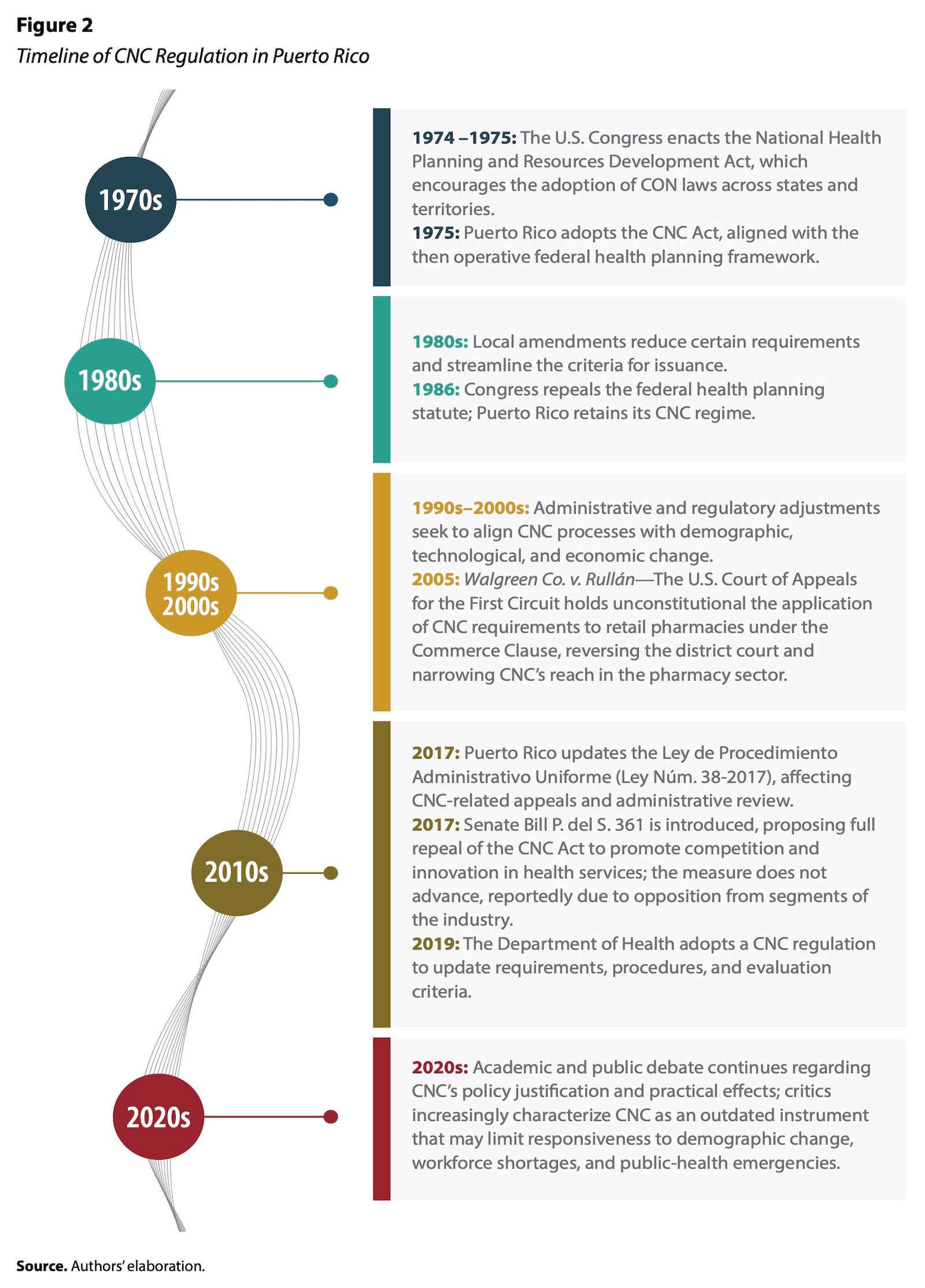
In Puerto Rico, CON laws and regulations are referred to as certificates of need and convenience (CNC). Puerto Rico’s Certificate of Need and Convenience Act (CNC Act) emerged within the broader wave of federal health care reforms of the 1970s. In particular, it aligned with the Federal Public Law 93-641, known as the National Health Planning and Resources Development Act of 1974 (1975), which established a federal–state–local framework to curb rapidly rising health-care costs and improve the distribution of resources. This federal statute created more than 200 health systems agencies (HSAs) responsible for regional planning, CON programs, and resource development throughout the United States and the territories. Its mandate sought to shift the emphasis from inpatient care to outpatient services, all with the goal of decreasing government health-care spending. Although the federal act was formally repealed in 1986, Puerto Rico kept its local legislation in force.
The statement of motives of the CNC Act affirms that the orderly planning of health-care facilities and services[1] is indispensable to adequately address the health needs of the population, control the costs of health-care services, and ensure that such services are provided in those population centers where they are needed (Ley de Certificados de Necesidad y Conveniencia [Ley], 1975/2006). The legislative initiative in Puerto Rico delegated to the secretary of health the authority to evaluate and authorize new health-care facilities or services[2] based on criteria such as population demand, the impact on existing services,[3] and alignment with the Government’s comprehensive development plans.
No individual or entity may construct, acquire, operate, or expand a health-care facility without a CNC. These facilities include hospitals; diagnostic and treatment centers; ambulatory surgery centers operating as independent facilities for procedures that do not require hospitalization; blood banks; clinical laboratories; home‑health programs, including therapeutic and infusion services provided in the home; and mobile units that offer services at various locations within a service area. A CNC is also required for capital investments of $2,000,000 or more in an existing health-care facility, or for the acquisition of highly specialized medical equipment valued at $1,000,000 or more.
3.1. CNC Applications
CNC applications follow a structured process established by the Department of Health. Any interested person or entity must submit documentation to the División de CNC y Vistas Administrativas (DCNCVA) that includes: (a) a certification identifying the name, mailing address, and physical address of all existing health facilities of the same type within the relevant service area; (b) evidence that the specific property identified for the proposed health facility is zoned to permit establishment of the service; (c) an economic, functional, and operational feasibility study of the project,[4] including an assessment of its likely impact on existing facilities within the service area; and (d) a statement estimating the time required to carry out and complete the proposed action (Reglamento del Secretario de Salud para Regir el Otorgamiento de Certificados de Necesidad y Conveniencia [Reglamento], 2019).[5]
The DCNCVA conducts an initial evaluation of the application and supporting documentation and may request additional information from the applicant. When an application is subject to the ordinary review procedure and is not covered by one of the exceptions listed in Reglamento 9084, the DCNCVA publishes a notice in newspapers of general circulation to inform the public and convene a public hearing.[6] The hearing is not triggered by a request from an interested party; however, stakeholders may participate once the notice has been issued. Its purpose is to receive evidence, objections, and testimony concerning the health-care services for which the CNC is being requested.[7] If a CNC application is denied after a public hearing has been held, the applicant may file a complaint (querella), thereby initiating the process leading to an adjudicatory hearing (Reglamento, 2019).[8]
The CNC requirement is not limited to the activities described in the preceding subsection. A wide range of additional actions likewise require the secretary of health’s authorization or sign-off. Figure 1 presents a selection of 80 types of applications the DCNCVA receives during a fiscal year. Because multiple submissions may be filed within each category, the office may process more than 200 applications in a given year. Not all of these actions require a public hearing and may be addressed relatively quickly through a CNC certification of exemption;[9] nevertheless, the list illustrates the breadth—and the day-to-day intensity—of CNC-related oversight in Puerto Rico.
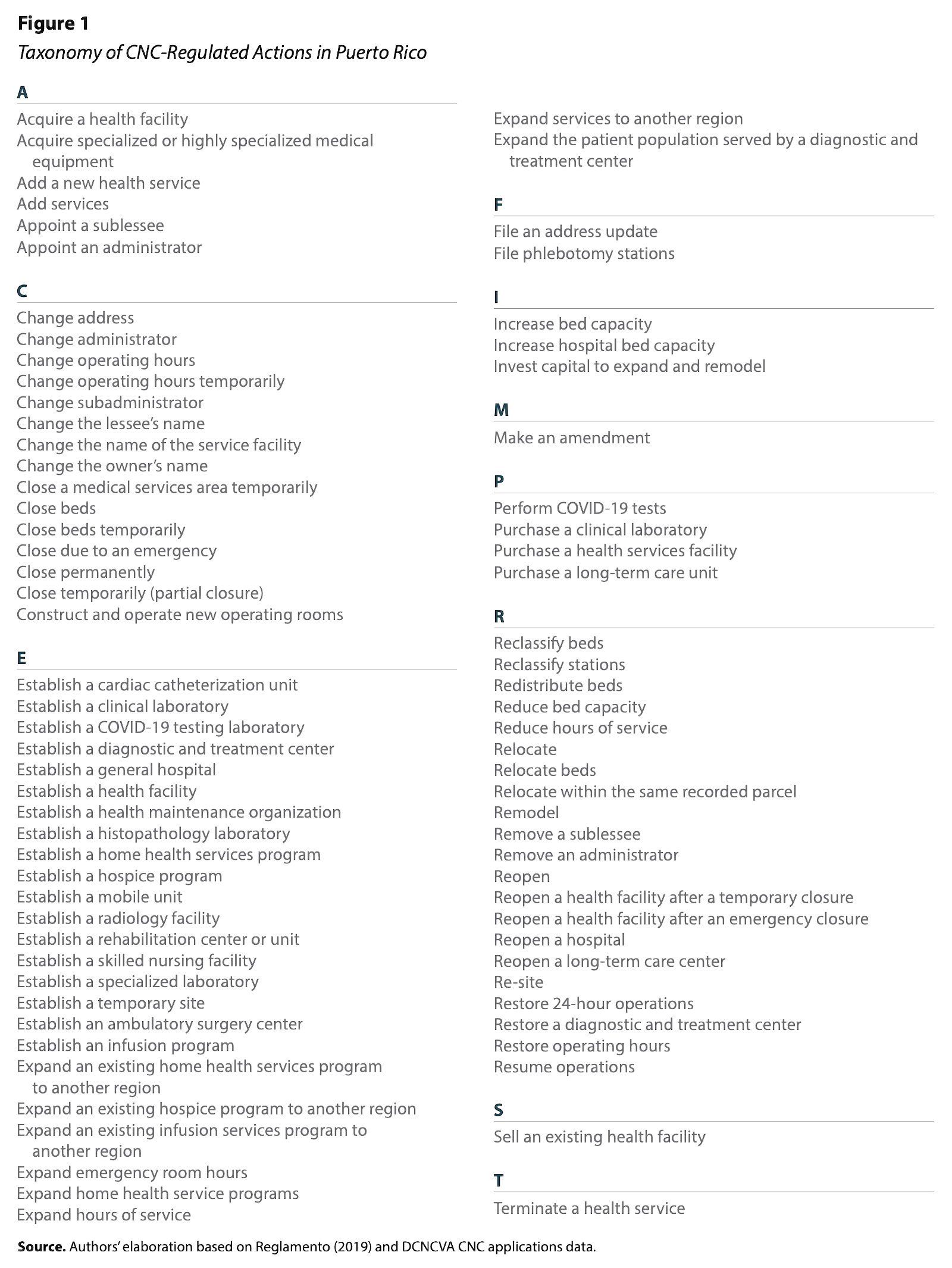
Several action types in the CNC taxonomy may appear similar in everyday language—such as close due to an emergency, close permanently, close temporarily (partial closure), shown in Figure 1—but each represents a distinct regulatory action with different legal consequences. These distinctions are not merely semantic. Within the CNC framework, the duration, cause, and scope of a closure (or any operational change) determine whether the action constitutes a reportable event, a modification of an existing authorization, or an action that requires a new state permit. For this reason, the taxonomy preserves these subtle but legally significant differences to ensure accurate classification, compliance assessment, and cross‑jurisdictional comparison.[10]
Tables 1 and 2 summarize CNC activity for fiscal years 2020–2024 based on the agency’s available records.[11] Table 1 reports CNC applications and CNCs granted across all categories. The available data show fewer recorded applications than CNCs granted. According to the current director of the DCNCVA, the agency did not consistently maintain organized records of applications, approvals, and denials in prior years, based on the available files and information provided by office staff. This application-approval discrepancy therefore appears to reflect historical gaps in record keeping rather than a substantive pattern in CNC activity.
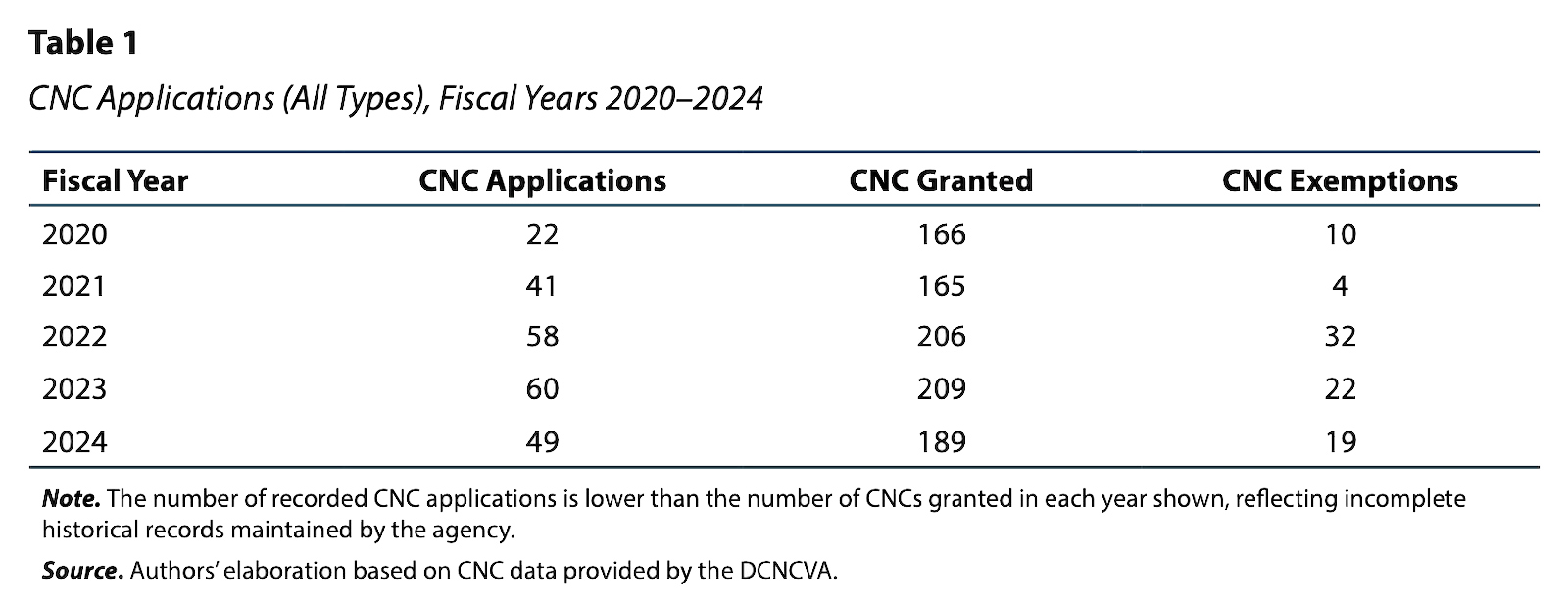
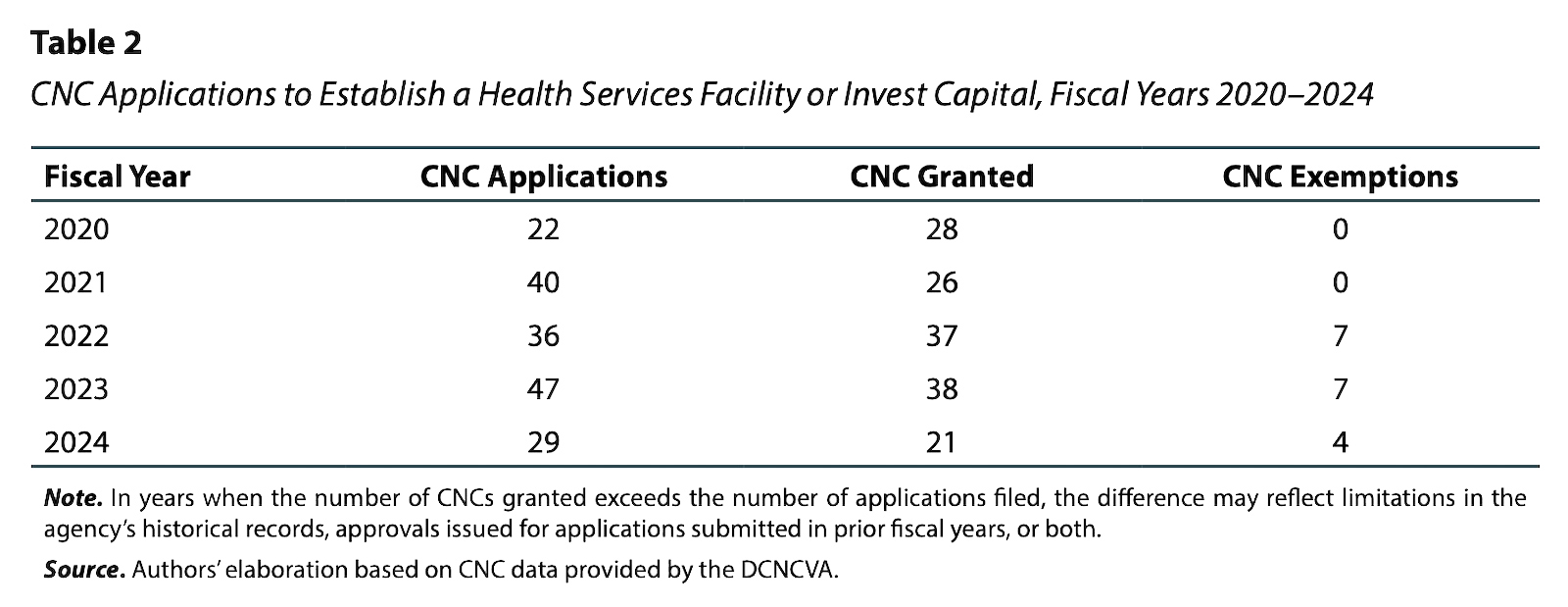
Table 2 focuses on CNC applications and approvals for establishing a health services facility or investing capital. In years when CNCs granted exceed applications filed, the difference likely reflects limitations in the agency’s historical records and approvals issued for applications submitted in prior fiscal years. Importantly, DCNCVA’s available records do not include economic data for CNC applications filed, CNCs granted, or CNC applications denied, limiting the extent to which the information can be used to assess the economic significance of approvals, processing delays, and denials.
Although much of the CON evidence is generated from U.S. state variation, the policy relevance for Puerto Rico depends on baseline system conditions. Comparative work on insurance coverage and health care delivery highlights differences between Puerto Rico and the U.S. states that may affect provider incentives and service availability (Portela & Sommers, 2015). In addition, research on Medicaid funding structures emphasizes how federal policy design can contribute to inequities in access and capacity in territories relative to states (Rivera-González et al., 2022). Finally, sector-specific evidence on home health quality in Puerto Rico provides a reminder that access and quality challenges may be more binding in certain service lines, which could change the welfare implications of restricting or enabling entry through CON review (Dixit & Rivera‐Hernandez, 2022).
3.2. Administrative and Geographic Features That Increase CNC Compliance Burdens
While the CNC statute establishes the general requirement to obtain a certificate of need and convenience, the CNC Act and its implementing regulation impose additional administrative and geographic requirements that can materially increase compliance costs and extend project timelines for health care providers in Puerto Rico. This section presents several examples of administrative and geographic features that may influence CNC application and approval processes and warrant closer consideration.
Letter of Intent (Pre-Application Notice). The regulatory process begins before an application is filed. Applicants must submit a letter of intent to the secretary of health at least 30 days before filing either a CNC application or a request for a certificate of exemption (Reglamento, 2019). This requirement adds an initial waiting period that may delay time-sensitive investments.
Election-Period Moratoria. Article 21A of the CNC Act restricts the Department of Health from receiving new CNC applications and from issuing determinations regarding existing certificates during the two months preceding and the two months following a general election (Ley, 1975/2006). In practice, this creates a four-month pause every four years, irrespective of the urgency of the proposed project.
Geographic Hierarchies and Saturation Thresholds. The regulation does not apply a uniform geographic standard for assessing “need;” instead, it defines service areas that vary by facility type, including:
- Health region: Used for services such as hospice programs, home health programs, infusion services, and neonatal intensive care units.
- Sub-region: Used for general hospitals, rehabilitation centers, and advanced imaging (e.g., MRI and CT).
- Municipality: Used for diagnostic and treatment centers.
- Radial mile: Used for clinical laboratories and conventional radiology. For these services, the area may be treated as “saturated” if the resident population within a one-mile radius meets the applicable regulatory threshold (Reglamento, 2019).
Exit Constraints (Advance Notice and Closure Limits). The CNC regulatory framework also governs provider exit and the closure of health-care facilities. A CNC holder that intends to carry out a permanent or temporary closure must submit a CNC application for closure at least 30 days before the closure’s effective date. In addition, a facility may not remain closed for more than 12 months without risking cancellation of its CNC (Reglamento, 2019). Although these provisions operate at the point of exit, not entry, they may also affect investment decisions by making them less reversible. Providers considering a new facility or service line may be less willing to enter the market if a later closure or suspension requires advance notice, regulatory review, or possible loss of the CNC.
Existing Safe Harbors for Expansion. Current regulations provide limited expedited pathways for certain established providers; for example, existing home health, hospice, and infusion programs that have operated successfully for at least two years and remain compliant with applicable federal standards may expand into other regions through a certificate of exemption instead of undergoing the full CNC process (Reglamento, 2019). This structure may provide a template for broader “narrow CNC” reforms, but also favors existing providers over new entrants.
Compliance Risks and Penalties. The CNC Act and regulations impose significant penalties and fines for noncompliance, which can deter unauthorized entry or expansion:
- Criminal penalties: Violations of the CNC Act constitute misdemeanors punishable by a fine of up to $500, imprisonment for up to six months, or both (Ley, 1975/2006).
- Administrative fines: The secretary of health may impose administrative fines of up to $5,000 per violation (Reglamento, 2019).
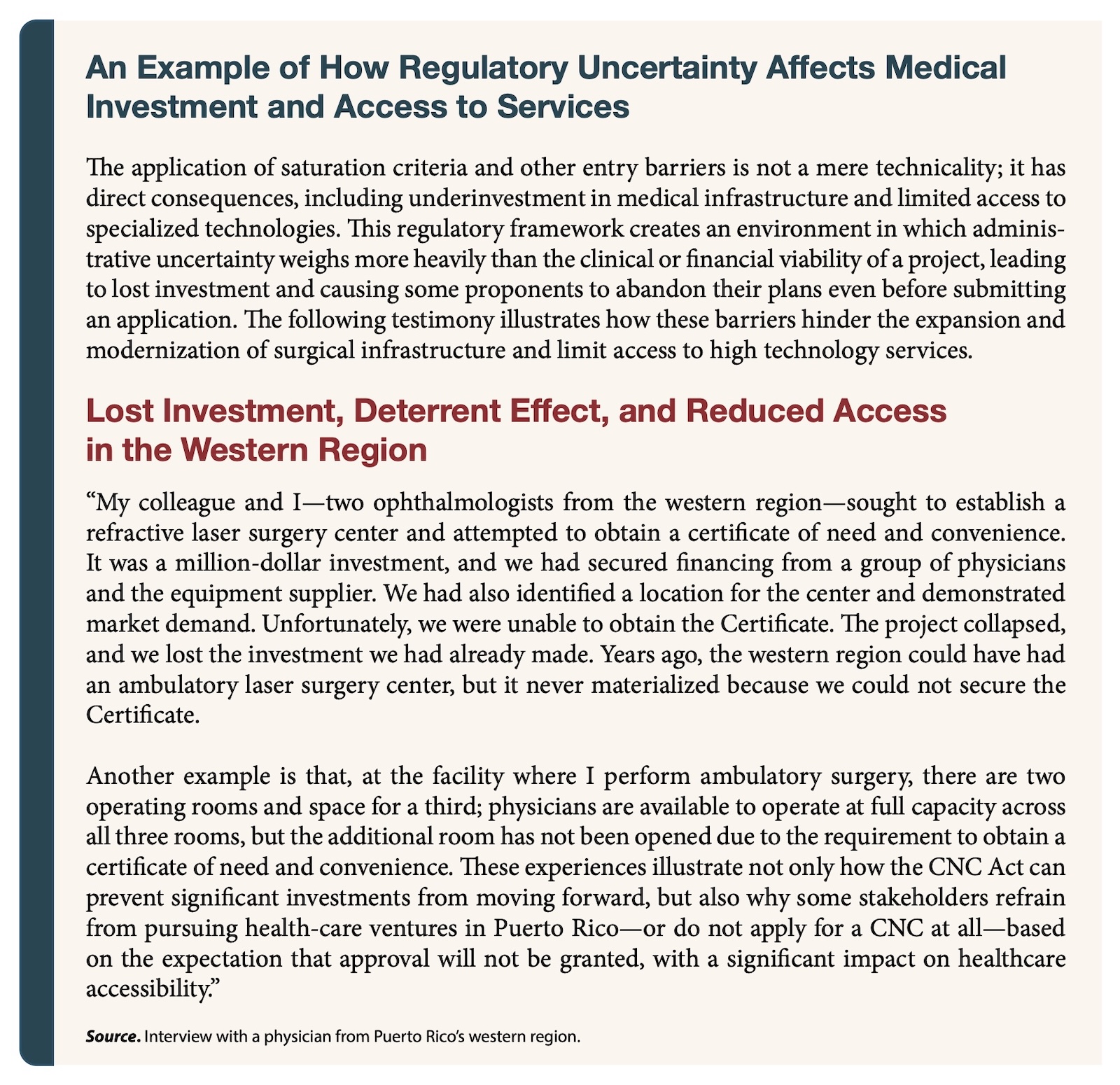
Several additional features of CNC administration warrant further scrutiny. These include (a) whether applications may be denied on the ground that a proposed service would duplicate existing capacity; (b) whether approval depends on utilization thresholds for incumbent providers; and (c) the extent to which existing providers can object to applications, request hearings, or otherwise shape the review process. Each of these mechanisms can increase compliance burdens and may also create opportunities for incumbents to delay or deter entry.[12] A full assessment of their practical effects would require a closer review of agency guidance, application files, hearing records, and denial decisions.
3.3. Structural Constraints in Puerto Rico’s Health-Care System
Puerto Rico’s health care sector operates under structural constraints that shape access, quality, and market dynamics in ways that differ markedly from those of U.S. states. Although health-care spending represents a relatively high share of Puerto Rico’s income—approximately 16.6% of gross national product (GNP)—this ratio should be interpreted in light of both health spending levels and the size of the Island’s GNP base. System performance is weakened by chronic underfunding, demographic pressures, and workforce shortages, together with lower incomes and a higher prevalence of chronic disease (Dixit & Rivera-Hernández, 2022; Galíndez, 2024; Portela & Sommers, 2015; Rivera González et al., 2022). Given these socioeconomic conditions, and absent careful design and implementation, CON-style entry restrictions may further constrain access and service availability, particularly for vulnerable and underserved populations.
A central challenge is the persistent shortage and uneven geographic distribution of health care professionals in Puerto Rico. Recent analyses identify gaps in the supply and distribution of physicians[13] and other clinicians, driven by migration, compensation differentials, and limited opportunities for professional advancement (Rivera González et al., 2022). Federal shortage-area data reinforce that Puerto Rico’s access problem extends beyond physicians alone. In fiscal year 2024, the Health Resources and Services Administration (2024) identified 42 primary care Health Professional Shortage Areas (HPSAs), 99 dental health HPSAs, and 75 mental health HPSAs in Puerto Rico.[14] These designations are relevant to the evaluation of Puerto Rico’s CNC regime because they indicate that health care capacity and geographic access are already constrained in multiple service areas.
At the same time, Puerto Rico reports one of the highest insurance coverage rates in the United States—around 94% (Burton, 2025)—yet per capita health care spending is substantially lower than in the states, at roughly $5,400 per person in Puerto Rico compared with about $15,400 in the United States overall (Galíndez, 2024). This combination of high coverage, comparatively low spending, and documented provider shortages places sustained pressure on hospitals, clinics, and provider networks, limiting their ability to invest in infrastructure and expand services. In this context, the design of Puerto Rico’s CNC regime warrants close scrutiny because requirements governing the creation, expansion, or relocation of health care services can either facilitate needed investments or add further delays and costs to providers already operating under financial and workforce constraints.
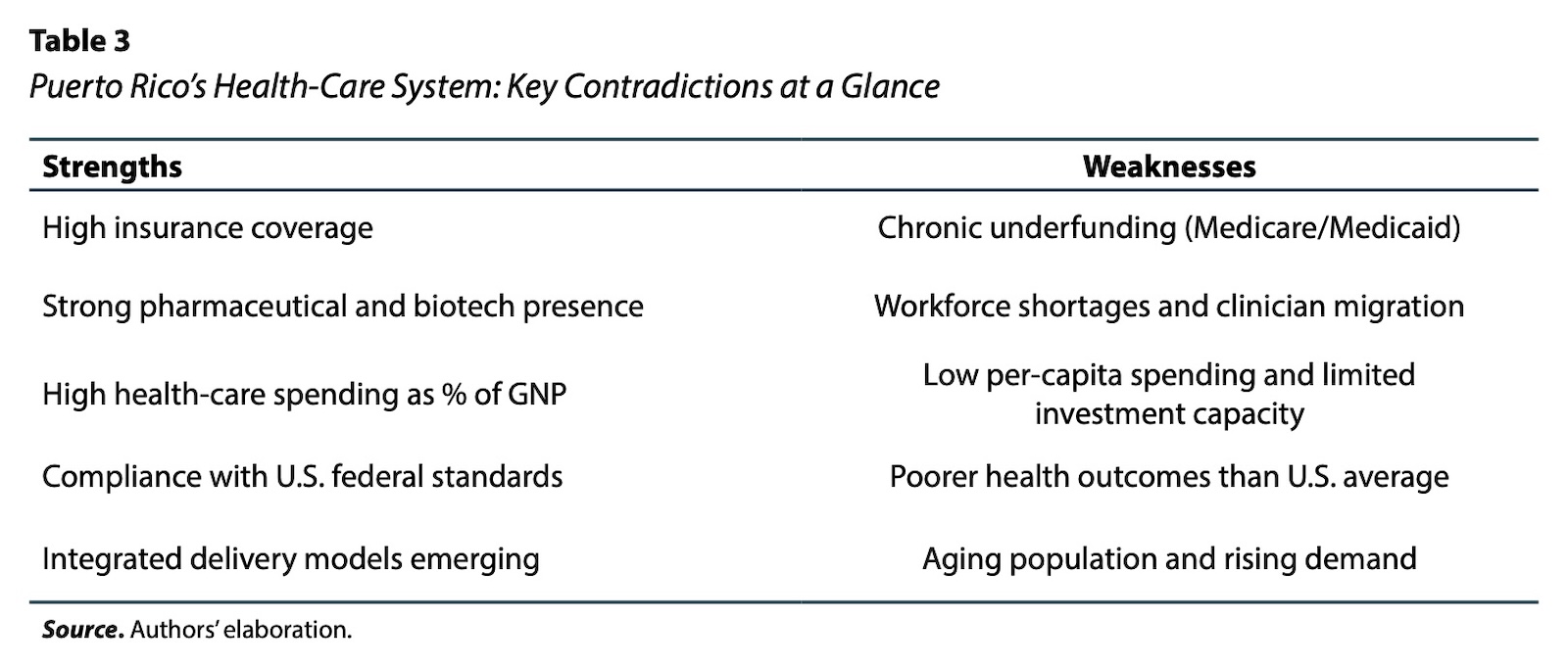
Federal program design further constrains system capacity. Medicare reimbursement rates in Puerto Rico are estimated to be approximately 41% below the U.S. average, and Medicaid funding is capped through block grants,[15] creating recurring fiscal uncertainty and limiting the Island’s ability to respond to demand fluctuations (Galíndez, 2024; Rivera-González et al., 2022). These financing structures contribute to infrastructure deterioration, delayed capital investment, and reduced availability of certain specialty services. Available indicators are consistent with these pressures: approximately 27.8% of adults in Puerto Rico report fair or poor health, compared with 16.1% in the United States, and chronic disease burdens remain elevated.
Demographic trends compound these challenges. Although Puerto Rico’s overall population has declined, the share of older adults has increased, intensifying demand for long-term care, home health, and chronic-disease management (Galíndez, 2024). Evidence on home-health quality underscores the need to improve access and service capacity in post-acute care, where Puerto Rico already lags behind U.S. states (Dixit & Rivera-Hernández, 2022). These shifts place additional strain on a system already operating with limited workforce capacity and constrained reimbursement. At the same time, the Island retains important strengths (Table 3), including a robust pharmaceutical and biomanufacturing sector and emerging opportunities in integrated care and advanced therapies (Burton, 2025). These assets can support revitalization if structural barriers—particularly those affecting entry, investment, and workforce stability—are addressed.
3.4. Financial Distress in Puerto Rico’s Hospital Sector and Its Implications for CNC Reform
Puerto Rico’s hospital sector is experiencing acute financial distress, with multiple institutions reportedly entering Chapter 11 proceedings or ceasing operations.[16] Policymakers and subject-matter experts have warned that these pressures could intensify in the near term. Reported drivers include continued outmigration, low occupancy (61% in 2024), and payment delays by insurers. The literature on the financial condition of hospitals also identifies other contributing factors, including a decline in births—particularly for maternity wards—and an ongoing shift in service delivery toward ambulatory care models, with significant implications for hospital cost structures and revenues (E. R. Ríos, personal communication, February 20, 2026). Some estimates project that roughly two dozen hospitals (out of a total of 67 on the Island) may face bankruptcy proceedings, and that additional facilities could close over the next two years.
A recent study found that the crisis is not attributable simply to an aggregate lack of resources, but rather to administrative and regulatory factors that affect how resources are allocated and translated into provider solvency; the study therefore underscored the need for regulatory changes (Rosado Lebrón, 2025).[17] This deterioration in provider finances cuts both ways for CNC policy in Puerto Rico. On one hand, it underscores the importance of regulatory choices that avoid unnecessary administrative delay and duplicative “capacity/adequacy” determinations—especially where federal participation standards (e.g., Medicare conditions of participation) already impose baseline requirements for safety, staffing, and operational capability. Streamlining or eliminating CNC review for Medicare-qualified providers and for low-risk expansions can reduce friction costs at a moment when the system needs timely capital investment, service reconfiguration, and operational flexibility.
On the other hand, the crisis also highlights the need to pair any CNC repeal or narrowing with targeted, non-protectionist tools to safeguard access—such as robust licensure and inspection, transparent quality reporting, and payment/contracting reforms—without relying on entry restrictions to stabilize incumbents. In short, current market stress is not a justification for maintaining broad CNC barriers; instead, it strengthens the case for reform that preserves safety and accountability while enabling faster adaptation, investment, and competition where appropriate.
3.5. Attempt at CNC Reforms and Judicial Processes
Puerto Rico’s CNC Act has been amended several times to adapt to economic, demographic, and technological changes. The general trend has been to make the law less restrictive and to streamline administrative processes; for example, during the 1980s several provisions were repealed to simplify the criteria for issuing certificates, and the appeals process was harmonized with the Ley de Procedimiento Administrativo Uniforme (Ley Núm. 38‑2017). The most significant change, however, stemmed from the decision of the U.S. Court of Appeals for the First Circuit in Walgreen Co. v. Rullán (2005), which invalidated the requirement to obtain a CNC to open and operate retail pharmacies under the federal Constitution’s Commerce Clause.
The court concluded that the statute discriminated against interstate commerce by exempting all existing pharmacies in Puerto Rico (established local interests) from complying with the CNC requirement, while imposing onerous entry barriers on new competitors, including national chains such as Walgreens. The court determined that the law functioned as a protectionist measure favoring local pharmacies, limiting external competition without a sufficiently legitimate public‑health justification that could not be achieved through less discriminatory means.[18] This decision reversed a prior ruling by the U.S. District Court for the District of Puerto Rico, which had upheld the requirement.
A bill introduced in the Puerto Rico Senate (P. del S. 361, 2017) sought to repeal the CNC Act, in order to promote free competition and encourage innovation and the rapid expansion of health-care services. The bill sponsors argued that the CNC regime was obsolete and acted as a barrier to economic development in a critical sector. The initiative emerged in a context of economic and fiscal crisis in Puerto Rico, exacerbated by prolonged recession and public debt, as well as concerns about shortages in health-care services due to recurring natural disasters and the mass migration of medical professionals, which left entire regions with limited access to care.
P. del S. 361 (2017) contended that the CNC fostered monopolies by protecting existing providers from competition, thereby raising costs and limiting accessibility. The proposed repeal sought to replace regulatory control with free-market mechanisms, allowing clinics, hospitals, and services to open immediately without prior approval from the secretary of health. This was a deregulatory measure aimed at reducing administrative burdens and expediting commercial activity. It was also framed within the fiscal and labor reforms advanced under the Puerto Rico Oversight, Management, and Economic Stability Act of 2016, which imposed austerity measures and prioritized economic efficiency.
The bill proceeded through the ordinary legislative process but ultimately failed due to opposition from sectors of the health-care industry.[19] Although the bill was not approved, debate over whether the CNC Act should be repealed or reformed continues. For some researchers and stakeholders, the CNC constitutes an outdated regulatory instrument that discourages private investment and constrains innovation in a period marked by demographic decline and systemic pressures on the health‑care system (Carrión-Tavárez, 2024; Náter‑Lebrón, 2017). Others view it as a barrier to addressing workforce shortages and adapting to population shifts (Galva, 2025). Broader patterns across jurisdictions also underscore the relevance of reform; since the mid-1980s, countries and subnational governments around the world have undertaken significant constitutional and health-system reforms, often grounding legal challenges in fundamental rights when regulations unduly restrict access to care or economic activity (Calderón & Jaramillo, 2024).
4. CON Reforms in the United States
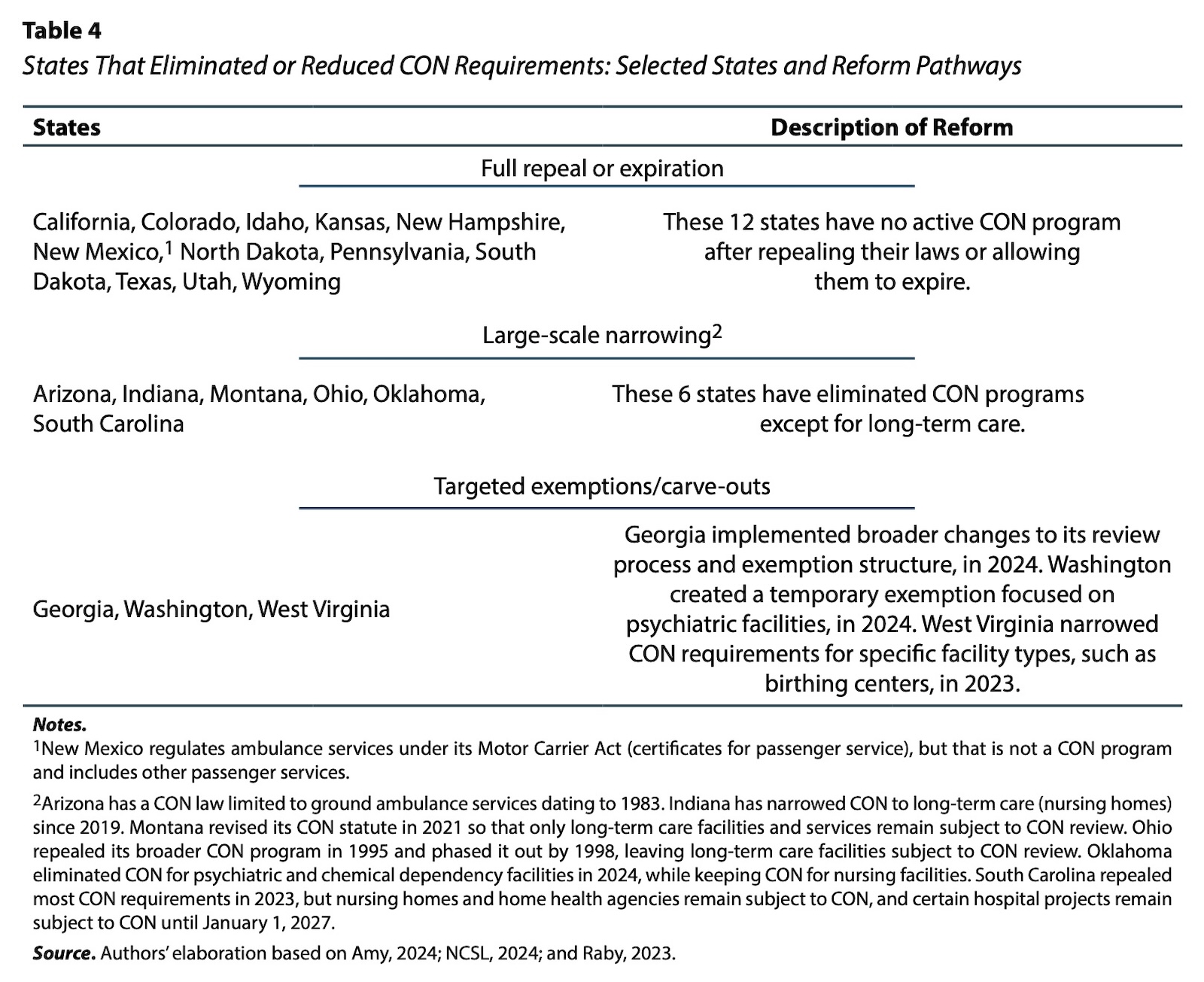
Recent state activity reflects a broader trend toward narrowing or reassessing CON requirements. Between 2020 and 2024, multiple states enacted reforms modifying the scope, exemptions, thresholds, or procedures of their CON programs; in 2024 alone, at least 12 states enacted legislation adjusting their CON laws in some capacity. Reform momentum has largely taken the form of partial repeals, targeted deregulation, and rolling phase-outs. These reforms have occurred alongside a longer-term pattern of repeal: 12 states have fully repealed their CON programs or allowed them to expire.
CON reform in the United States has proceeded incrementally, with states periodically narrowing the scope of review (e.g., exempting certain technologies or outpatient facilities), raising capital- expenditure thresholds, streamlining timelines, or fully repealing CON requirements for particular service categories. Recent reform debates have tended to emphasize how CON rules interact with contemporary market trends—including consolidation, outpatient migration, and workforce constraints—and whether the original planning rationale remains persuasive in an era of managed care, value-based purchasing, and heightened scrutiny of hospital prices and market power.
4.1. Reform Trends and Legislative Activity
Across the past decade, many reform proposals have focused on “partial repeal” strategies instead of eliminating CON entirely. Common approaches include targeted exemptions for ambulatory surgery centers (ASCs), advanced imaging, or selected long-term care projects; expedited review for replacement facilities; and limits on the ability of incumbent providers to intervene in or delay applications. From a policy-design perspective, these changes can be understood as efforts to preserve planning authority in politically salient areas while reducing administrative burden and strategic delay in markets where entry barriers may be most distortionary.
Because CON is state-specific and frequently amended, a complete accounting of recent reform bills is best presented as an appendix or table (see Table 4). Publicly maintained trackers summarize which states maintain CON programs and the broad service categories they regulate, providing a baseline for situating reform proposals in the national landscape (National Conference of State Legislatures [NCSL], 2024). More broadly, recent state legislative activity on health-care market structure has also intersected with CON debates, as policymakers consider whether to address prices and access through entry regulation, payment reforms, antitrust enforcement, or new oversight of consolidation and contracting (NCSL, 2025).
4.2. Evidence on Outcomes Under Repeal or Reduced Stringency
The empirical literature on CON and outcomes is not uniform, but the balance of evidence generally points to adverse effects, especially for service availability, cost per service, and access for underserved populations. This evidence supports treating repeal as the first-best reform option, while placing the burden on defenders of narrower CON restrictions to justify them in light of their documented costs. For hospital outcomes, border-based evidence exploiting adjacent counties in different regulatory regimes finds that CON laws are associated with higher heart-attack mortality, a result consistent with delayed access to key time-sensitive services when entry and capacity expansion are more constrained (Chiu, 2021). Complementary recent evidence examines broader mortality relationships and further motivates evaluating CON not only through spending and capacity metrics but also through patient-centered outcomes (Cantor et al., 2025).
For long-term care, evidence suggests that the effects of CON can depend on baseline market conditions and on whether regulations restrict beds, facilities, or ownership forms. In the nursing home sector, empirical research finds that CON regulation is associated with quality differences, with results that are sensitive to quality measures and market structure (Bailey, 2020). Post-pandemic analyses also highlight that quality and staffing constraints can persist independently of occupancy dynamics (Weiss et al., 2024), which complicates inferences about whether restricting new entry will improve or worsen outcomes in a given state.
Importantly, there is little evidence that repealing or modifying CON requirements leads to closures of existing health-care facilities. Stratmann et al. (2024) find no evidence that ASC CON repeal is associated with rural hospital closures; on the contrary, some models associate repeal with fewer medical service reductions. Mitchell and Slivinski (2025) similarly conclude that, following repeal or reform, outcomes generally do not worsen and may improve through greater access, lower costs, or higher quality, although effects vary by service and time horizon.
4.3. Why Effects Differ Across Jurisdictions
Differences in estimated CON effects across states can reflect several mechanisms. First, states vary in what they regulate (beds, imaging, ASCs, long-term care), so two states may both “have CON” but affect different margins of entry and expansion. Second, implementation details matter: evidentiary standards, review timelines, capital-expenditure thresholds, moratorium thresholds,[20] and opportunities for incumbent intervention can change how binding CON is in practice. Third, the counterfactual differs: in markets with severe workforce shortages or low reimbursement, repeal may not generate substantial new supply even if regulatory barriers are removed, whereas in high-demand markets with available capital and labor, repeal may induce rapid entry and capacity growth.
Although full repeal may be the most direct way to remove CON-related entry barriers, reform design can also proceed through targeted changes when political constraints make comprehensive repeal infeasible. In that setting, incremental reforms should be understood as steps toward reducing the most distortionary restrictions, especially when paired with outcome monitoring. A central question is whether regulatory structures enable people, clinicians, and entrepreneurs to respond to local health-care needs through voluntary exchange and service innovation. This issue is especially relevant for accessibility, since barriers to entry can limit timely, geographically convenient options for care, particularly in underserved communities. Viewed against this broader U.S. reform context, Puerto Rico would not be an outlier in reconsidering the scope and design of its CNC regime.
5. Recommendations for Reforming Puerto Rico’s CNC Regime
Puerto Rico’s CNC system functions as an ex ante entry and expansion control: it conditions the opening, expansion, or offering of certain health services on prior approval by the local regulator. As framed in the Puerto Rico materials in this study (including the CNC statute and implementing regulation), this structure necessarily empowers incumbents to delay or block potential competitors and turns “need” into an administrative judgment rather than an outcome revealed through patient choice, payer contracting, and quality oversight. This section recommends a strong presumption in favor of repeal of Puerto Rico’s CNC Act, or (if full repeal is not politically feasible) a large-scale narrowing of CNC categories to a short list of genuinely exceptional, high-risk contexts.
The recommendation is grounded in (a) the documented tendency of CON systems to operate as protectionist barriers with weak or inconsistent evidence of public benefit, and (b) the fact that Puerto Rico’s providers are already subject to extensive federal oversight (e.g., Medicare conditions of participation, federal fraud-and-abuse rules, and quality reporting regimes). In particular, if an entity meets the requirements to enroll and operate as a Medicare provider (and otherwise satisfies applicable federal and Puerto Rico licensure and safety standards), Puerto Rico should not require an additional, duplicative local “capacity/adequacy” showing through a CNC process as a precondition to market entry.
5.1. Recommendation 1. Prefer Repeal With Targeted Substitutes for Legitimate State Interests
The most administratively coherent approach is full repeal of the CNC requirement, coupled with a shift to tools that directly target legitimate state interests. This transition would specifically help new entrants and smaller providers who currently lack the resources to navigate complex administrative hurdles or counter challenges from established incumbents.
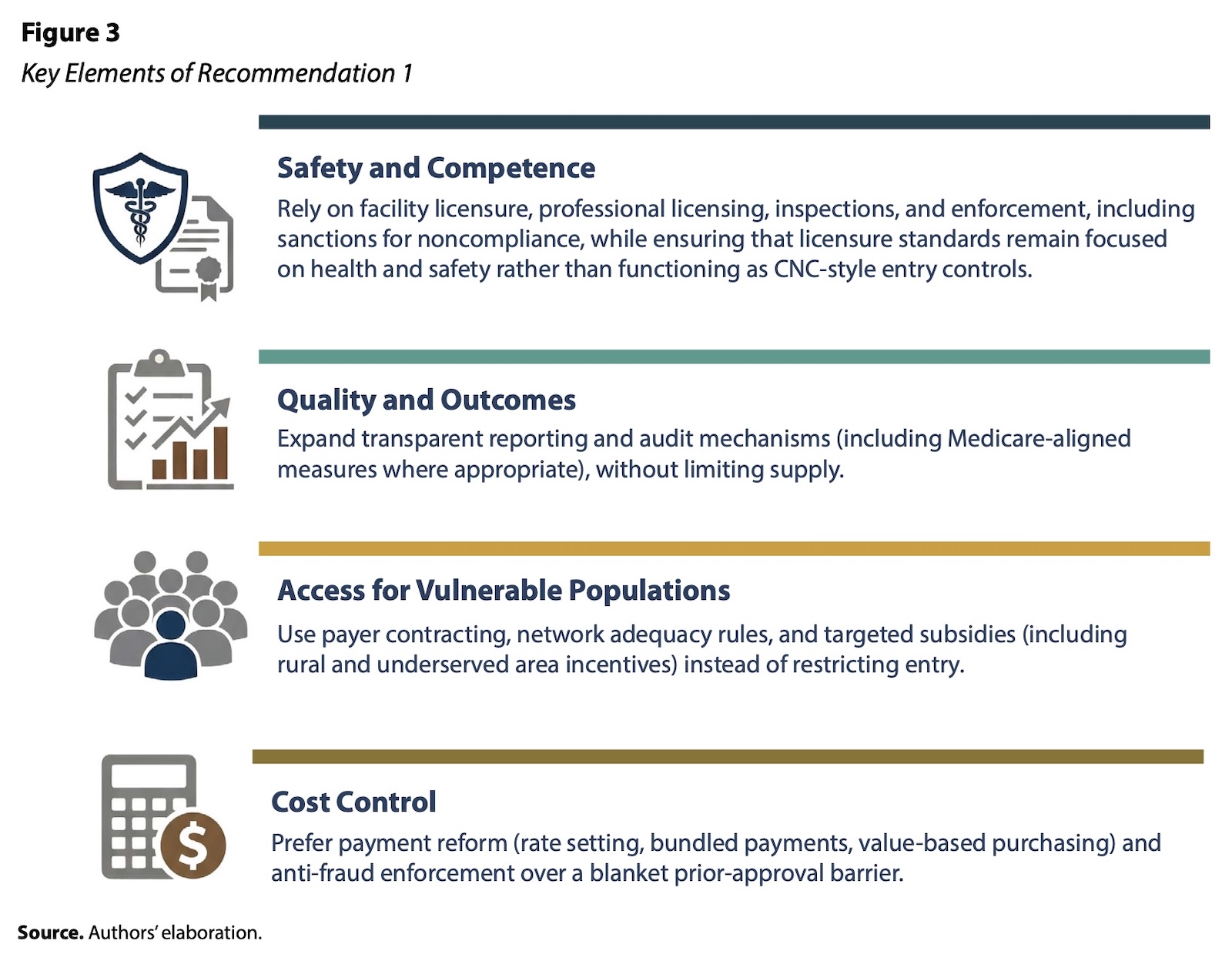
This approach aligns with the dominant pattern of CON reform in the United States over the last several decades: many states have repealed CON entirely, while others have narrowed CON coverage to fewer categories or set higher thresholds for review, reflecting skepticism that supply restrictions reliably reduce costs or improve quality.
5.2. Recommendation 2. Adopt a Narrow CNC Model With Clear Exemptions
If Puerto Rico retains a CNC framework, reform should be large‑scale and designed to minimize its use as an incumbent‑veto mechanism.
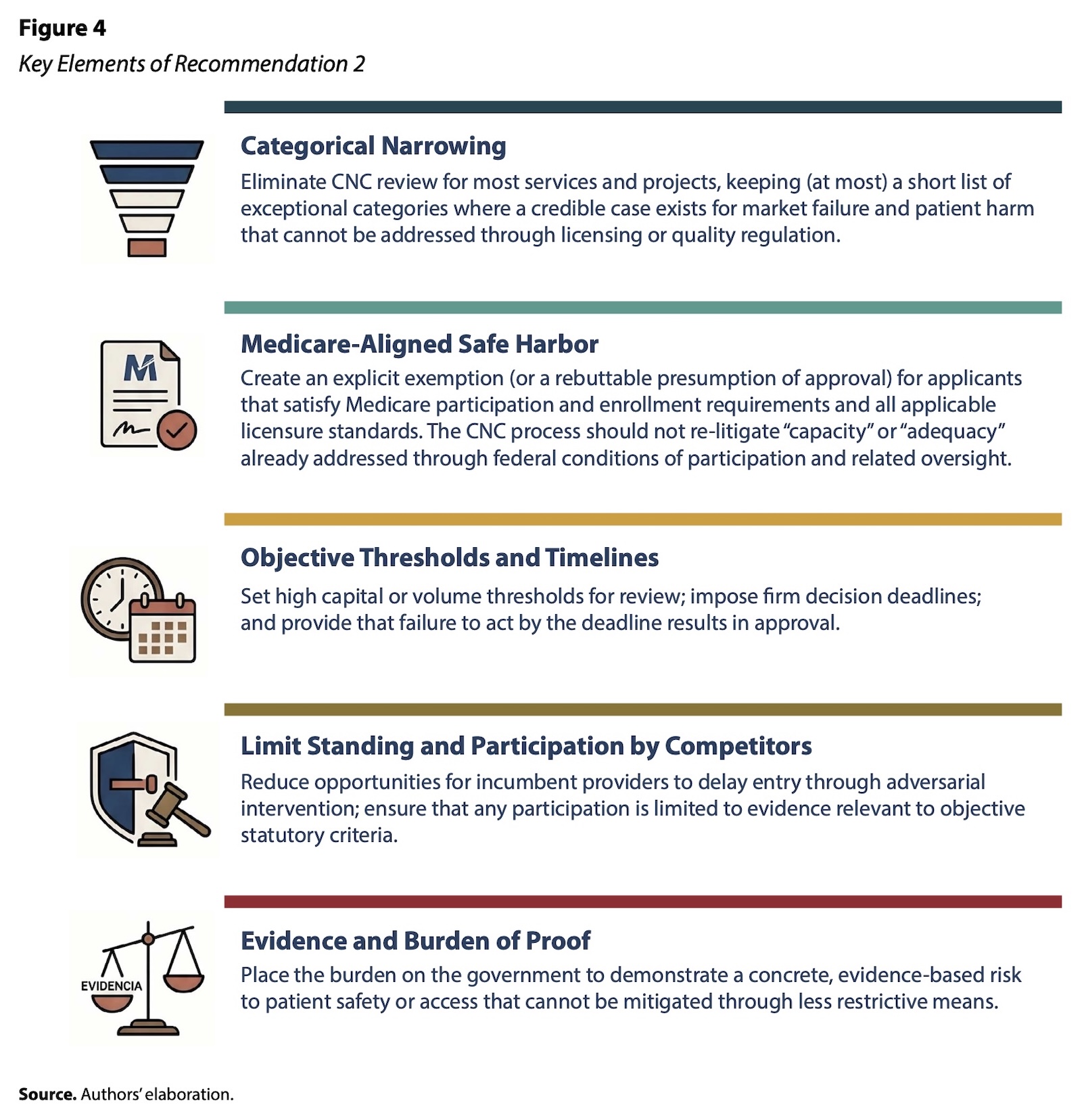
If full repeal is not feasible, narrowing should prioritize services for which entry restrictions are especially difficult to justify: services used by vulnerable populations, services unlikely to be overprescribed, low-capital services, and lower-cost alternatives to institutional care. In Puerto Rico’s CNC framework, these categories are especially relevant to behavioral health, substance-use treatment, home health, hospice, and other outpatient or community-based services. These reforms track a common U.S. pattern in “reform but not repeal” states: narrowing the scope of review, elevating review thresholds, and adding clearer procedural guardrails to reduce delay and rent-seeking.
5.3. Recommendation 3. Choose an Implementation Path: All-at-Once Repeal or Phased Reform
All‑at‑once repeal is recommended where feasible because it is simpler to administer and reduces uncertainty for investors, providers, and payers. It also avoids years of litigation and strategic behavior that can occur when partial carve‑outs create contested boundary lines. A gradual transition can be justified if policymakers want to sequence changes to protect continuity of care and administrative capacity.
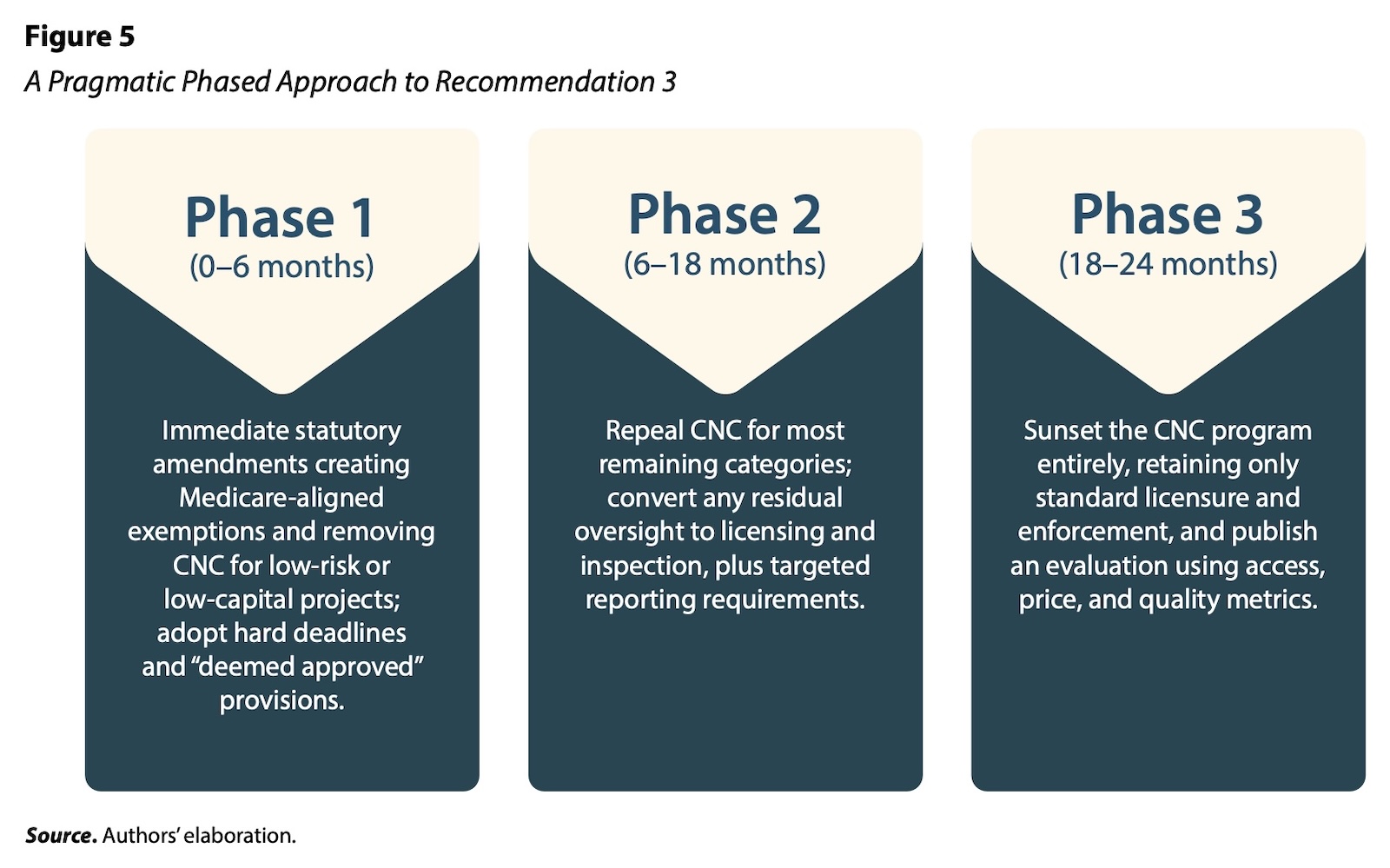
Under either pathway, the policy objective should be clear: Puerto Rico should move from an entry-restriction model to a modern oversight framework that emphasizes safety, quality, fraud prevention, and transparency. In Puerto Rico—where federal regulation already governs substantial aspects of provider participation, billing, and quality—the incremental value of a second, discretionary “need” proceeding is difficult to justify, while the competitive harms of delay and exclusion are predictable. Finally, any regulatory reform agenda should also address federal funding disparities by advocating for more equitable federal health-care financing for Puerto Rico, including reforms that align the Island’s Medicaid funding structure more closely with that of the states and provide greater fiscal stability to support infrastructure investment and improved access.
5.4. Increase Transparency and Public Reporting
Future reform should also require DCNCVA to collect and publish basic performance data on the CNC process. At minimum, the Department should report (a) the number of applications filed, approved, denied, withdrawn, and pending; (b) the average time to final decision; (c) the percentage of applications opposed by competitors; and (d) approval rates for opposed and unopposed applications. DCNCVA should also collect and publish economic information associated with applications filed, CNCs granted, and applications denied, including proposed capital investment, estimated operating costs, expected service capacity, and projected geographic service area. The Department could also require applicants to estimate the time and cost of preparing CNC applications and, where relevant, the number of patients or services delayed while approval was pending. Because some providers may never apply due to the cost or uncertainty of the process, periodic surveys of existing and prospective providers could help identify deterred entry that is not visible in application records.
6. Conclusion
CON regimes in the United States, and Puerto Rico’s CNC framework in particular, are best understood as supply-control systems that require would-be entrants and expanding providers to obtain discretionary approval before they can offer services, add capacity, or invest in new facilities. Across the CON literature included in this study, the central empirical and policy theme is consistent: CON-style regulation tends to function as an entry barrier that protects incumbents, while evidence of broad, reproducible public benefits (such as sustained cost containment, improved quality, or better access for underserved communities) is limited, mixed, or context-dependent.
Puerto Rico’s health system also operates within a dense overlay of federal requirements. Medicare (and related federal programs and enforcement regimes) already condition participation on detailed standards for patient safety, staffing, facilities, billing integrity, and reporting. This federal baseline materially reduces the case for a separate, duplicative CNC proceeding aimed at re-proving “capacity” or “adequacy” as a predicate to entry. Where legitimate governmental objectives remain—patient safety, quality assurance, fraud prevention, and equitable access—they are more directly addressed through licensure, inspections, enforcement, transparent quality reporting, and payment and contracting reforms than through a broad prior-approval barrier that can delay investment and restrict competition.
For these reasons, the report’s recommendations support a strong presumption in favor of repealing Puerto Rico’s CNC requirements or, at minimum, implementing a large-scale narrowing of the categories subject to CNC review, paired with clear exemptions and procedural guardrails (including Medicare-aligned safe harbors, objective thresholds, fixed timelines, and limits on incumbent-driven delay). Whether implemented all at once or through a phased transition, the policy direction should be the same: move Puerto Rico away from discretionary entry restrictions and toward modern oversight tools that protect patients while enabling timely investment, innovation, and competitive provision of care.
7. Acknowledgements
The authors express their gratitude to Julio Juliá for his willingness to respond to their inquiries. They also acknowledge José Luis Rivera Rivera for his support for this study, Katherine Hoyos Negrón for her availability and valuable contribution to the research, and Juan Zayas for his assistance in identifying CNC applicants willing to be interviewed for this project. Finally, they extend their thanks to Edwin R. Ríos, McKenzie Richards, and Jorge L. Rodríguez for reviewing and commenting on the first draft of the report; and to Matthew D. Mitchell for his meticulous reading and critique of the manuscript.
8. References
Amy, J. (2024, March 21). Georgia Senate lawmakers give final passage to bill to loosen health permit rules. Associated Press. https://apnews.com/article/georgia-health-care-hospitals-certificate-need-con-aa09dd79d34f912e0103b0e0b444693f
Burton, P. (2025, July 15). Healthcare in Puerto Rico: Bridging the gaps. PharmaBoardroom. https://pharmaboardroom.com/articles/healthcare-in-puerto-rico-bridging-the-gaps/
Calderón, M. C. B., & Jaramillo, V. N. (2024). The selection process of jurisdictional guarantees in Ecuador during the COVID-19 health emergency. Brazilian Journal of Development, 10(8), e71994‒e71994. https://doi.org/10.34117/bjdv10n8-031
Cantor, J. H., Horwitz, J., Whaley, C. M., & Yu, A. (2025). The relationship between certificate of need laws and mortality (NBER Working Paper No. 34403). National Bureau of Economic Research. https://doi.org/10.3386/w34403
Carrión-Tavárez, Á. (2024, October). Economic freedom actions for a just and prosperous Puerto Rico. Institute for Economic Liberty. https://doi.org/10.53095/13584014
Cavanaugh, J., & Mitchell, M. D. (n.d.). Debunking certificate of need myths in Maine.
Chiu, K. (2021). The impact of certificate of need laws on heart attack mortality: Evidence from county borders. Journal of Health Economics, 79, 102518. https://doi.org/10.1016/j.jhealeco.2021.102518
Courtemanche, C. J., & Garuccio, J. (2025). How do certificate-of-need laws affect hospitals? A review of the evidence (NBER Working Paper No. 34026). National Bureau of Economic Research. http://www.nber.org/papers/w34026
Dixit, M. N., & Rivera‐Hernandez, M. (2022). Home health quality in Puerto Rico compared with US states. Journal of the American Geriatrics Society, 71(1), 287–289.
Galíndez, J. A. (2024, May 11). Outlook of Puerto Rico healthcare market. https://galindezllc.com/wp-content/uploads/2024/05/Outlook-of-Puerto-Rico-Healthcare-Market-5-11-24.pdf
Galva, J. E. (2025, February 27). Certificados de necesidad y conveniencia: un obstáculo mortal para los buenos servicios de salud [Certificates of need and convenience: A deadly obstacle to quality health care]. El Vocero. https://www.elvocero.com/opinion/opini-n-certificados-de-necesidad-y-conveniencia-un-obst-culo-mortal-para-los-buenos-servicios/article_2b4bdd76-f45e-11ef-9c85-a7da1e6365c8.html
Hayek, F. A. (2009). The use of knowledge in society. American Economic Review, XXXV, No. 4. https://www.cato.org/sites/cato.org/files/articles/hayek-use-knowledge-society.pdf (Original work published 1945)
Health Resources and Services Administration. (2024, September 30). Fiscal Year (FY) 2024 - Puerto Rico. https://data.hrsa.gov/api/factsheet/3/72/2024.
Informe negativo, P. del S. 361, 18a Asamblea Legislativa, 1a Sesión Ordinaria. (2017). https://view.officeapps.live.com/op/view.aspx?src=https%3A%2F%2Fsutra.oslpr.org%2FSutraFiles%2Fanejos_conv%2F2017-2020%2F%257B4B7F7A03-6715-4A37-A4BD-68BDF15EEE04%257D.doc&wdOrigin=BROWSELINK
Financial Oversight and Management Board for Puerto Rico. (2025, June). Revised 2024 fiscal plan for Puerto Rico. Restoring Growth and Prosperity. https://oversightboard.pr.gov/fiscal-plans/
Ley de Certificados de Necesidad y Conveniencia, Ley Núm. 2 de 7 de noviembre de 1975, según enmendada (1975 & rev. 2006). https://bvirtualogp.pr.gov/ogp/Bvirtual/leyesreferencia/PDF/Salud/2-1975.pdf
Mitchell, M. D. (2024a). Certificate of need laws in health care: Past, present, and future. INQUIRY: The Journal of Health Care Organization, Provision, and Financing, 61, 1–11. https://doi.org/10.1177/00469580241251937
Mitchell, M. D. (2024b). Certificate-of-need laws in healthcare: A comprehensive review of the literature. Southern Economic Journal, 1–38. https://doi.org/10.1002/soej.12698
Mitchell, M. & Slivinski, S. (2025). After CON: What happens when states repeal or modify their certificate of need requirements in health care? George Mason Law Review, 32(3), 627–655. https://lawreview.gmu.edu/print__issues/after-con-what-happens-when-states-repeal-or-modify-their-certificate-of-need-requirements-in-health-care/
Náter-Lebrón, R. F. (2017, May 23). Certificados de necesidad y conveniencia: ¿instrumentos del siglo pasado? [Certificates of need and convenience: Instruments of a bygone era?] Microjuris Al Día. https://aldia.microjuris.com/2017/05/23/certificados-de-necesidad-y-conveniencia-instrumentos-del-siglo-pasado/
National Conference of State Legislatures. (2025). From mergers to market power: 2025 legislative recap on health care consolidation. https://www.ncsl.org/health/from-mergers-to-market-power-2025-legislative-recap-on-health-care-consolidation
National Conference of State Legislatures. (2024). Certificate of need state laws. https://www.ncsl.org/health/certificate-of-need-state-laws/maptype/tile
National Health Planning and Resources Development Act of 1974, Pub. L. No. 93-641, 88 Stat. 2225 (1975).
P. del S. 361, 18a Asamblea Legislativa, 1a Sesión Ordinaria. (2017). https://view.officeapps.live.com/op/view.aspx?src=https%3A%2F%2Faldia.microjuris.com%2Fwp-content%2Fuploads%2F2017%2F05%2Fps361-radicado.doc&wdOrigin=BROWSELINK
Portela, M. & Sommers, B. D. (2015). On the outskirts of national health reform: A comparative assessment of health insurance and access to care in Puerto Rico and the United States. The Milbank Quarterly, 93(3), 584–608. https://doi.org/10.1111/1468-0009.12138
Raby, J. (2023, March 9). West Virginia lawmakers ok hospital expansion rule changes. Associated Press. https://apnews.com/article/bcb7b2072224069db7dea6d4b86e1fee
Reglamento de Procedimientos Adjudicativos y de Reglamentación en el Departamento de Salud, Núm. 9321 de 29 de octubre de 2021 (2021). https://www.salud.pr.gov/CMS/DOWNLOAD/6045
Reglamento del Secretario de Salud para Regir el Otorgamiento de Certificados de Necesidad y Conveniencia, Núm. 9084 de 17 de mayo de 2019. (2019). https://aldia.microjuris.com/wp-content/uploads/2022/04/Reglamento-9084-1.pdf
Rivera-González, A. C., Roby, D. H., Stimpson, J. P., Bustamante, A. V., Purtle, J., Bellamy, S. L., & Ortega, A. N. (2022). The impact of Medicaid funding structures on inequities in health care access for Latinos in New York, Florida, and Puerto Rico. Health Services Research, 57(S2), 172–182. https://doi.org/10.1111/1475-6773.14036
Rosado Lebrón, J. (2025, September 19). “No es por falta de recursos que tenemos esta crisis”: Analistas aseguran hay fondos para servicios de salud [“The crisis is not due to a lack of resources”: Analysts assert that funding exists for health services]. Metro. https://www.metro.pr/estilo-vida/2025/09/19/no-es-por-falta-de-recursos-que-tenemos-esta-crisis-analistas-aseguran-hay-fondos-para-servicios-de-salud/
Santini-Dominguez, R., Martinez-Trabal, J., & Gonzalez-Diaz, G. (2025). Puerto Rico’s specialist crisis—a wake-up call for health equity and action. JAMA Health Forum, 6(6). https://doi.org/10.1001/jamahealthforum.2025.1949
Stansel, D., Torra, J. Mitchell, M., & Carrión-Tavárez, Á. (2024, December). Economic Freedom of North America 2024. Fraser Institute. https://doi.org/10.53095/88975023
Stratmann, T. (2022). The effects of certificate-of-need laws on the quality of hospital medical services. Journal of Risk and Financial Management, 15(6), 272. https://doi.org/10.3390/jrfm15060272
Stratmann, T., Bjoerkheim, M., & Koopman, C. (2025). The causal effect of repealing certificate‐of‐need laws for ambulatory surgical centers: Does access to medical services increase? Southern Economic Journal, 92(1), 63–86. https://doi.org/10.1002/soej.12710
Vera Rosado, I. (2024, January 25). Crisis o reajuste de la industria de la salud [Crisis or readjustment in the health care industry?]. Asociación de Hospitales de Puerto Rico. https://www.hospitalespr.org/noticias-del-dia/crisis-o-reajuste-de-la-industria-de-la-salud/#:~:text=Crisis%20o%20reajuste%20de%20la,de%20Hospitales%20de%20Puerto%20Rico
Walgreen Co. v. Rullan, 405 F.3d 50 (1st Cir. 2005). https://caselaw.findlaw.com/court/us-1st-circuit/1448139.html#:~:text=In%20the%20district%20court%2C%20Walgreen,entering%20the%20Puerto%20Rico%20market.
Weiss, M., Normand, S.-L. T., Grabowski, D. C., Blacker, D., Newhouse, J. P., & Hsu, J. (2024). All-cause nursing home mortality rates have remained above pre-pandemic levels after accounting for decline in occupancy. Health Affairs Scholar, 2(11), qxae126. https://doi.org/10.1093/haschl/qxae126
9. About the Authors
Ángel Carrión-Tavárez is a professor and transdisciplinary researcher whose work bridges academic inquiry, public policy, and international collaboration. He holds a B.A. in social sciences from the University of Puerto Rico, an M.A. in humanities from California State University, and a Ph.D. in integration and economic and territorial development from Universidad de León, Spain. Dr. Carrión-Tavárez has served as professor of regional and business geography and director of the Center for Business Research at the University of Puerto Rico. Over the course of his career, he has lectured at universities in Germany, Spain, the United States, Mexico, Colombia, Brazil, Peru, and Chile. He has authored more than 200 works across various disciplines and has been interviewed for articles, columns, and reports featured in The Wall Street Journal, Newsweek, Forbes, National Public Radio, Univision, Radio France Internationale, and Al Jazeera.
Jaimie Cavanaugh is senior state policy counsel at Pacific Legal Foundation, where she works with legislators across the United States to eliminate burdensome regulations and expand individual opportunity. A recognized national expert on certificate of need (CON) laws, Jaimie has spent years urging lawmakers to reform or repeal these restrictive statutes that create unnecessary barriers to opening healthcare facilities. She has published in-depth reports on CON laws and written extensively about their harms to patients, providers, and competition. As a former litigator, Jaimie has represented healthcare entrepreneurs in legal challenges to CON laws. Her work has also led to the recognition of the right to economic liberty by the Georgia Supreme Court and ended the ban on selling homemade baked goods in New Jersey. Her opinions can be found in the The Wall Street Journal, The Hill, National Review, and NBC Think.
Citation
Carrión-Tavárez, Á., & Cavanaugh, J. (2026, August). How certificates of need and convenience limit health‑care investment and access in Puerto Rico. Institute for Economic Liberty; Pacific Legal Foundation. https://doi.org/10.53095/13584021
[1] “The fundamental question of economic planning is who possesses the relevant knowledge to make decisions about the allocation and use of available resources. Friedrich A. Hayek argues that knowledge is dispersed among the various and numerous members of society based on circumstances of time and place. The essential economic problem is the coordination and utilization of individual knowledge for decision-making, which is never fully available to a single individual or central authority” (Carrión-Tavárez, 2024, p. 8). “This is not a dispute about whether planning is to be done or not. It is a dispute as to whether planning is to be done centrally, by one authority for the whole economic system, or is to be divided among many individuals. Planning in the specific sense in which the term is used in contemporary controversy necessarily means central planning—direction of the whole economic system according to one unified plan. Competition, on the other hand, means decentralized planning by many separate persons. . . . If we can agree that the economic problem of society is mainly one of rapid adaptation to changes in the particular circumstances of time and place, it would seem to follow that the ultimate decisions must be left to the people who are familiar with these circumstances, who know directly of the relevant changes and of the resources immediately available to meet them. We cannot expect that this problem will be solved by first communicating all this knowledge to a central board which, after integrating all knowledge, issues its orders. We must solve it by some form of decentralization” (Hayek, 1945/2009, pp. 7, 12).
[2] The CNC Act places “the orderly planning” of facilities and “the costs of health services” (Ley, 1975/2006, p. 1) “in the hands of a secretary—a central authority—in the Government. This turns the official into a censor, someone with the power to interfere in the vital activity of the market and to decide for entrepreneurs and consumers what investments and services are needed. It also presumptuously assumes that this official is superior to the rest of society, as it practically grants them the ability to choose for others where to go, whom to buy from, and how much to pay for a needed health product or service” (Carrión-Tavárez, 2024, p. 32).
[3] The necessity criterion requires the applicant to demonstrate that the proposal responds to an unmet demand within the population. The convenience criterion refers to ensuring that the project does not unduly affect existing services and that it contributes to the orderly development of the health-care system.
[4] Feasibility studies should be used primarily for financing purposes, rather than as a prerequisite for project approval or for the issuance of a permit by the State (E. R. Ríos, personal communication, February 20, 2026).
[5] The application also requires payment of a $100 filing fee.
[6] Reglamento 9084 establishes specific exceptions—including certain relocations, acquisitions, and security-related improvements—for which a public hearing is not required.
[7] Interviews conducted during the course of this research revealed that opposition to granting CNCs to new providers typically comes from existing health care providers in the market, including one of the Island’s largest hospital networks, which—as a standard practice—opposes virtually all applications filed.
[8] For information on the adjudicatory hearing process, see the Reglamento de Procedimientos Adjudicativos y de Reglamentación en el Departamento de Salud (2021).
[9] A CNC certificate of exemption is a determination that a CNC is not required to carry out a proposed action, provided that the applicant satisfies the requirements set forth in the CNC Act and its implementing regulation.
[10] Other examples from the CNC taxonomy further illustrate that these distinctions are not merely semantic but reflect legally significant differences in regulatory meaning; for instance, reclassify beds, redistribute beds, and relocate beds represent different regulatory actions involving beds, each with distinct operational implications. Likewise, acquire a health facility versus establish a health facility differentiates a change of ownership from a new market entry, actions that require different levels of proof of need. These examples underscore why the taxonomy preserves fine‑grained distinctions that may appear subtle in everyday language but are essential for accurate permitting analysis.
[11] Puerto Rico’s fiscal year runs from July 1 to June 30.
[12] The CNC Act and regulations embed incumbent-provider participation into the CNC process by recognizing existing providers in the relevant service area as affected parties and allowing them to participate in the review of applications for new or expanded services. Although such participation may be considered a way to gather information about market conditions and service capacity, it also creates a procedural mechanism through which existing providers can influence the entry or expansion of potential competitors.
[13] Recent evidence documents both a decline in the physician workforce and geographic maldistribution. Citing a market study of medical practice in Puerto Rico, Santini-Dominguez et al. (2025) report that only 9,809 physicians remained to serve a population of 3.2 million. They also state that between 365 and 500 physicians left Puerto Rico annually over the prior decade and that 69% of physicians were concentrated in just 10 metropolitan areas. They further note that more than 28% of active physicians were older than 60, and that more than 40% of specialists were projected to be at or above retirement age by 2027.
[14] These shortages also affect access to specialty services and emergency care and are projected to persist over the next decade.
[15] “Under Section 1108(g) of the Social Security Act, Puerto Rico can access federal funds for Medicaid, but unlike for U.S. states, it is subject to an annual funding ceiling for the federal non-CHIP (Children’s Health Insurance Program) Medicaid fund—meaning Puerto Rico is responsible for covering all costs above this cap. Medicaid spending in each U.S. state and Washington, D.C. is not capped and is subject to cost share by the state government and federal government. Historically, the actual cap amount applied to Puerto Rico’s Medicaid Program varied based on a series of one-time congressional actions to increase funding to Puerto Rico’s Medicaid Program. Most recently, under the 2023 Consolidated Appropriations Act, Puerto Rico is eligible to receive more than $19 billion over federal fiscal year (FFY) 2023-FFY2027. This total includes additional enhancements to the base federal allotment subject to certain conditions that Puerto Rico must meet. In addition, the 2023 Consolidated Appropriations Act extends the increased FMAP of 76% until September 30, 2027” (Financial Oversight and Management Board for Puerto Rico, 2025, p. 51).
[16] Fifty-five percent of hospitals in Puerto Rico are currently operating at a financial loss. Approximately 70% of hospital reimbursement is tied to Medicare and Medicaid, and residents of Puerto Rico receive funding at levels that are “markedly unequal” compared with those in the states (Vera Rosado, 2024).
[17] For a more detailed discussion of Puerto Rico’s regulatory environment, see Carrión‑Tavárez (2024) and Stansel et al. (2024, ch. 3).
[18] This decision by the U.S. Court of Appeals for the First Circuit could provide a basis for individuals or entities from the United States seeking to establish or acquire other types of health care facilities in Puerto Rico to challenge the CNC requirement.
[19] Opponents argued that eliminating the CNC does not guarantee that free competition will produce an increase in the availability of health-care services for communities, does not incentivize job creation, and does not improve access to medical services (Informe negativo, 2017).
[20] Thresholds can determine whether CON review is binding in practice. Capital thresholds require review only above specified investment levels, while moratorium thresholds cap supply directly; for example, New York requires full CON review for general hospitals above the greater of $60 million or 10% of operating costs, subject to a $150 million cap; Wisconsin law separately imposes a statewide cap on licensed nursing-home beds.